Your Skin Is a Metabolic Report Card. Here’s How to Read It.
You’ve heard it a thousand times—drink water, eat clean, sleep eight hours, meditate and maybe you’re actually doing it. The green smoothies in the morning, the sunscreen at noon, and the good night care routine. But you still look in the mirror and see dullness, uneven skin tone, skin that looks somehow tired, like it’s running on low battery.
Here’s what’s actually going on: your skin is not the problem. It’s the messenger.
In 2026, the global beauty industry has a new obsession: “metabolic beauty”-the idea that your skin quality is a direct output of your internal systems. Your mitochondria. Your blood sugar. Your digestive efficiency. Big beauty houses are calling it the next frontier.
Ayurveda is not impressed. Not because the idea is wrong—but because Ayurveda has been saying this, with remarkable precision, for over 5,000 years. Long before anyone had a word for mitochondria, Ayurveda understood that every tissue in the body is a downstream product of how well you digest and metabolise. That includes your skin. That has always included your skin.
What’s new is that science now has the tools to measure what Ayurveda always knew. And the two are telling the same story.
Ayurveda Didn’t Call It ‘Metabolic Beauty’. It Called It Agni.
Every physiological process in Ayurveda-every single one-evolves around Agni: your digestive and metabolic fire. Not a metaphor. A precise description of the body’s transformation intelligence: the force that converts food into absorbed nutrients, nutrients into tissues, and tissues into vitality.
In Ayurvedic physiology, the body builds seven Dhatus (tissues) in sequence-and each one depends on the quality of the one before it. Rasa Dhatu — your plasma and lymph — is the very first, built directly from what your Agni can process. It feeds everything downstream: your blood, your muscle, your bone, your nerve tissue — and your skin.
When Agni is strong, the chain nourishes. When Agni is weak or irregular, digestion becomes incomplete, and the by-product is Ama — a residue of partially metabolised matter that accumulates in the tissues. Ama is essentially what we’d call systemic inflammation today. And chronically inflamed internal tissues produce skin that looks exactly that way: congested, dull, reactive, flat.
“In Ayurveda, a healthy body— including the skin — is a reflection of balanced Agni. Dull, rough, or uneven skin is almost always pointing to a deeper metabolic imbalance: a long-standing Agni weakness or Ama accumulation. Treating the surface alone is like polishing a mirror with a smudged hand. You have to address the source.”
— Dr. Khushboo, Ayurvedic Consultant
What Modern Science Is Just Beginning to Measure
What Ayurveda mapped as Agni, cellular biology is now measuring in molecular detail.
Mitochondria: the energy factories your skin runs on
Your skin is a high-renewal organ. Millions of skin cells are made, matured, and shed every day. That entire process runs on ATP — cellular energy manufactured by your mitochondria. When mitochondrial function is healthy, skin cells renew efficiently, collagen synthesis is robust, and the barrier stays intact.
When mitochondria are under stress — from blood sugar swings, chronic inflammation, sleep disruption, oxidative damage — energy supply falters. Collagen synthesis slows. Cell turnover becomes irregular. Reactive oxygen species (ROS) accumulate and damage the mitochondrial DNA itself. Studies have shown that mitochondrial dysfunction directly to accelerated skin ageing: wrinkle formation, uneven pigmentation, barrier breakdown, reduced healing.
In Ayurvedic terms: impaired Agni → poor tissue nourishment → visible skin decline.
In cellular terms: mitochondrial dysfunction → reduced ATP + excess ROS → premature ageing. Different vocabulary. The same biological reality.
Insulin, inflammation, and the pigmentation cycle
When blood sugar regulation is off — the body runs a persistent low-grade inflammatory state. That inflammation triggers cytokine release that directly signals melanocytes to overproduce melanin. The result: pigmentation that topicals struggle to resolve, because the stimulus is continuous and internal.
Research in Diabetes & Metabolism (2016) confirmed a direct inverse relationship between insulin sensitivity and skin pigmentation markers in healthy adults. Excess glucose also drives glycation — where sugar molecules bind to collagen, cross-linking and stiffening the fibres. Stiff collagen doesn’t plump. It contributes to the loss of that firm, bouncy quality most people associate with youth. Ayurveda calls this exact tissue state ‘Ama-loaded’: sticky, blocking, degrading.
6 Skin Signs That Are Actually Metabolic Messages
Your skin communicates metabolic status more clearly than most people realise. Here are six signals worth paying attention to:
|
Skin Sign |
What Your Body May Be Saying |
|
Persistent dullness despite good hydration & skincare |
Cellular energy deficit — mitochondria underperforming, Rasa Dhatu poorly nourished |
|
Pigmentation that keeps returning |
Chronic low-grade inflammation triggering melanin overproduction from inside |
|
Fine lines appearing earlier than expected |
Glycation + mitochondrial ROS damage to collagen fibres |
|
Adult breakouts or oily congestion (jawline especially) |
Blood sugar-driven sebum spike; Ama-loaded tissue expressing through skin |
|
Puffiness or skin that looks ‘heavy’ |
Sluggish lymph flow; Ama accumulation reducing tissue clarity |
|
Slow healing, persistent redness, reactive skin |
Mitochondrial immune signalling impaired; skin barrier compromised by metabolic stress |
Two or more of these together isn’t bad luck or the wrong serum. It’s your body asking for metabolic support.
Your gut is the first place metabolic health either builds or breaks down. Read: Kanji: India’s Original Fermented Drink for Gut Health and why the gut-skin connection is older than any beauty trend.
What Pinch of Health Is Actually Doing
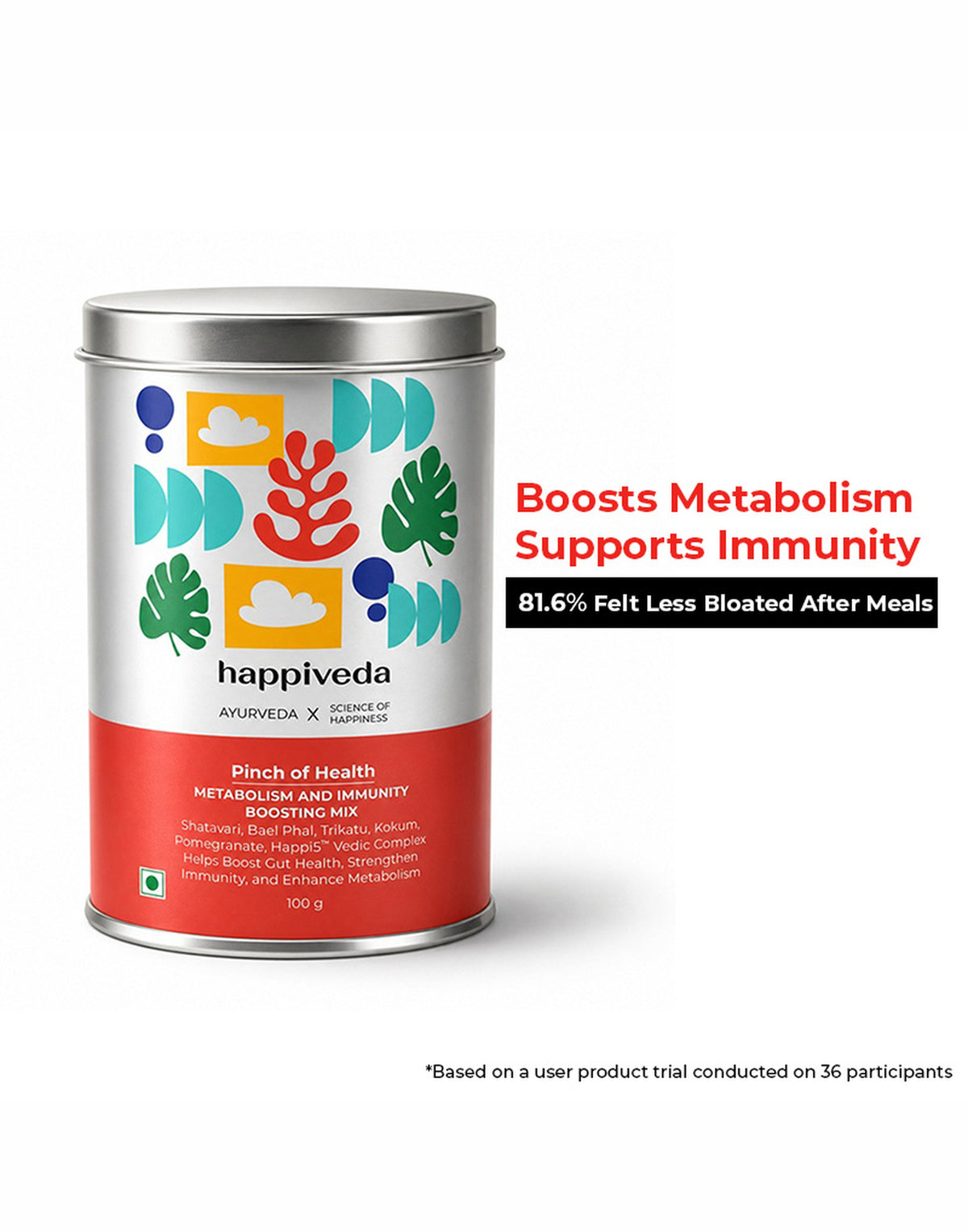
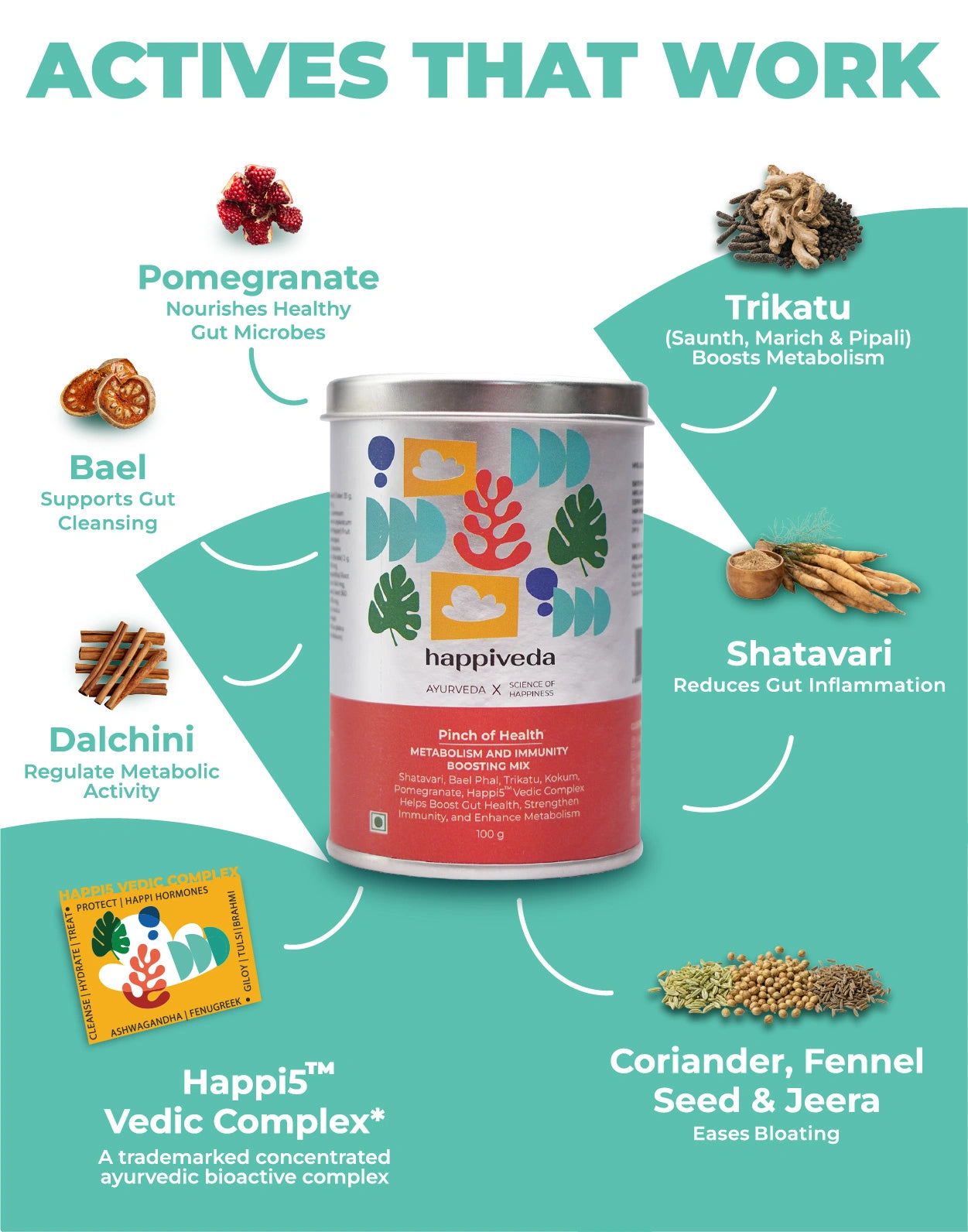
Happiveda’s Pinch of Health — the Metabolism & Immunity Boosting Mix — was built around one question: what does Agni actually need, daily and practically? The formulation brings together 10+ classical Ayurvedic ingredients, each with a specific metabolic role. Here’s what the science and tradition say about the key players:
|
Ingredient |
Traditional Role |
What It Does at the Metabolic Level |
|
Trikatu (Dry Ginger + Black Pepper + Long Pepper) |
Primary Agni-kindler in classical Ayurveda |
Stimulates digestive enzyme activity, reduces Ama formation, improves nutrient absorption into Rasa Dhatu — the first tissue that feeds your skin |
|
Kokum (Garcinia indica) |
Cooling, fat-metabolising, balances Pachaka Pitta |
Rich in garcinol, a potent antioxidant; supports lipid metabolism, reducing the oxidative load that stresses mitochondria |
|
Dalchini (Cinnamon) |
Deepaniya (digestive stimulant), Ama-reducing |
Studied for insulin-sensitising properties; helps moderate post-meal glucose spikes, reducing glycation pressure on collagen |
|
Shatavari |
Rasayana (tissue rejuvenator), nourishes Rasa & Rakta Dhatu |
Supports cortisol balance — critical because chronic stress is a primary driver of mitochondrial dysfunction and skin barrier breakdown |
|
Pomegranate (Dadima) |
Antioxidant, blood-purifying, skin-brightening in tradition |
High in ellagitannins; feeds beneficial gut bacteria, reduces systemic inflammation, supports clearer Rasa Dhatu |
|
Happi5™ Vedic Complex (Ashwagandha, Brahmi, Giloy, Tulsi, Fenugreek) |
Adaptogenic + immunomodulatory complex |
Collectively address the stress-metabolism-inflammation loop — the three-way cycle that most consistently degrades both metabolic health and skin quality |
What Supporting Your Metabolic Skin Health Actually Looks Like
No lifestyle overhaul needed. These are the few add-on that can help you score better
• Morning: warm water before coffee. Wakes Agni gently. Starts lymphatic movement.
• Meals: regular timing matters as much as content. Skipping meals, late dinners, all-day grazing—these create the blood sugar volatility that drives glycation and inflammation. Consuming meals, roughly on schedule, is the metabolic baseline.
• Post-meal movement: Just 100 steps (Shatpavali) after your main meal is one of the most studied metabolic interventions for blood sugar regulation. It also supports lymphatic flow—how Ama gets cleared.
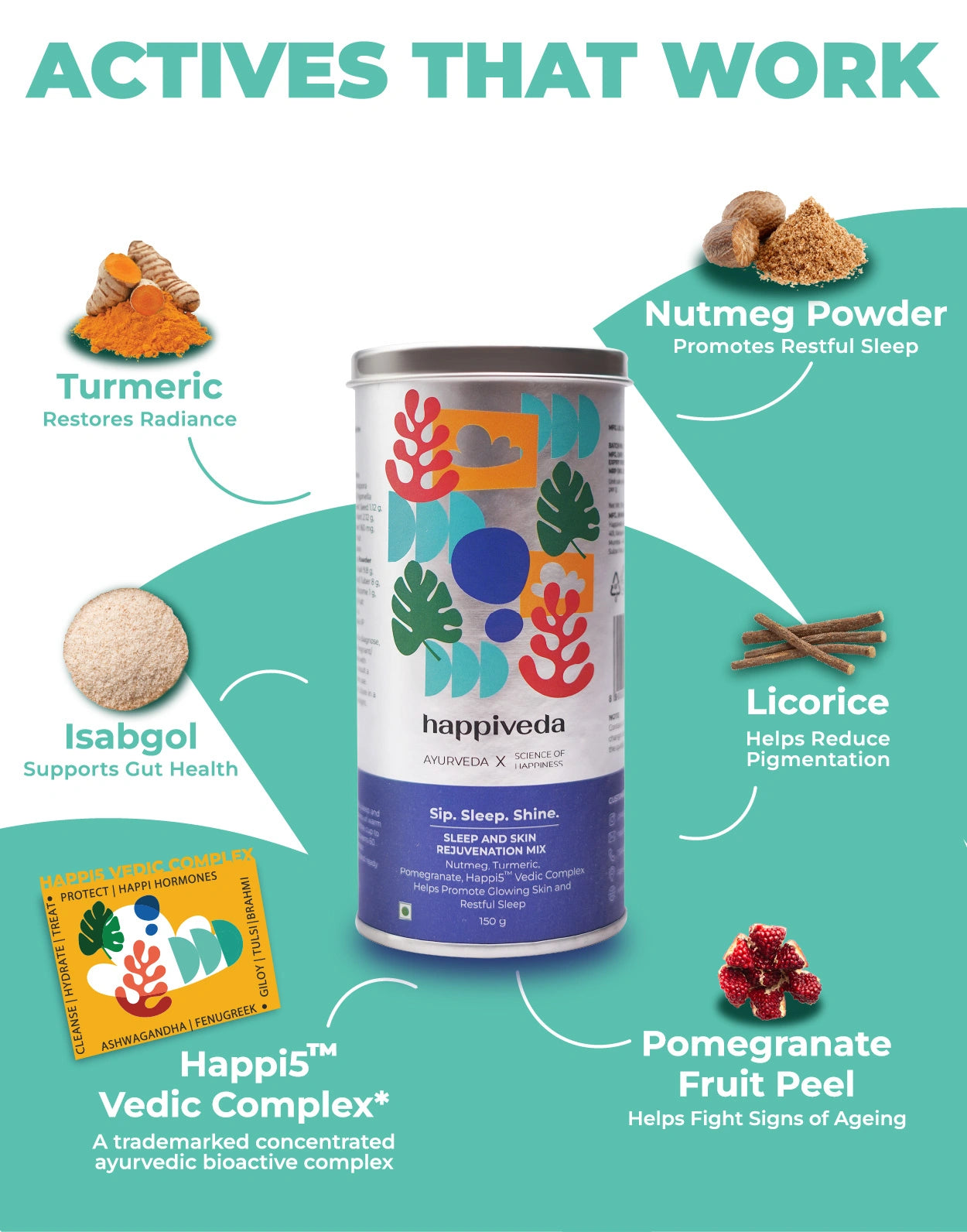
• Daily sprinkle: Add Pinch of Health metabolism & immunity boosting mix into every meal. This is where the Agni support accumulates over weeks.
• Sleep consistency: regular sleep and wake times. Mitochondria have a circadian rhythm. Disrupted sleep disrupts repair-and skin looks exactly like it: tired.
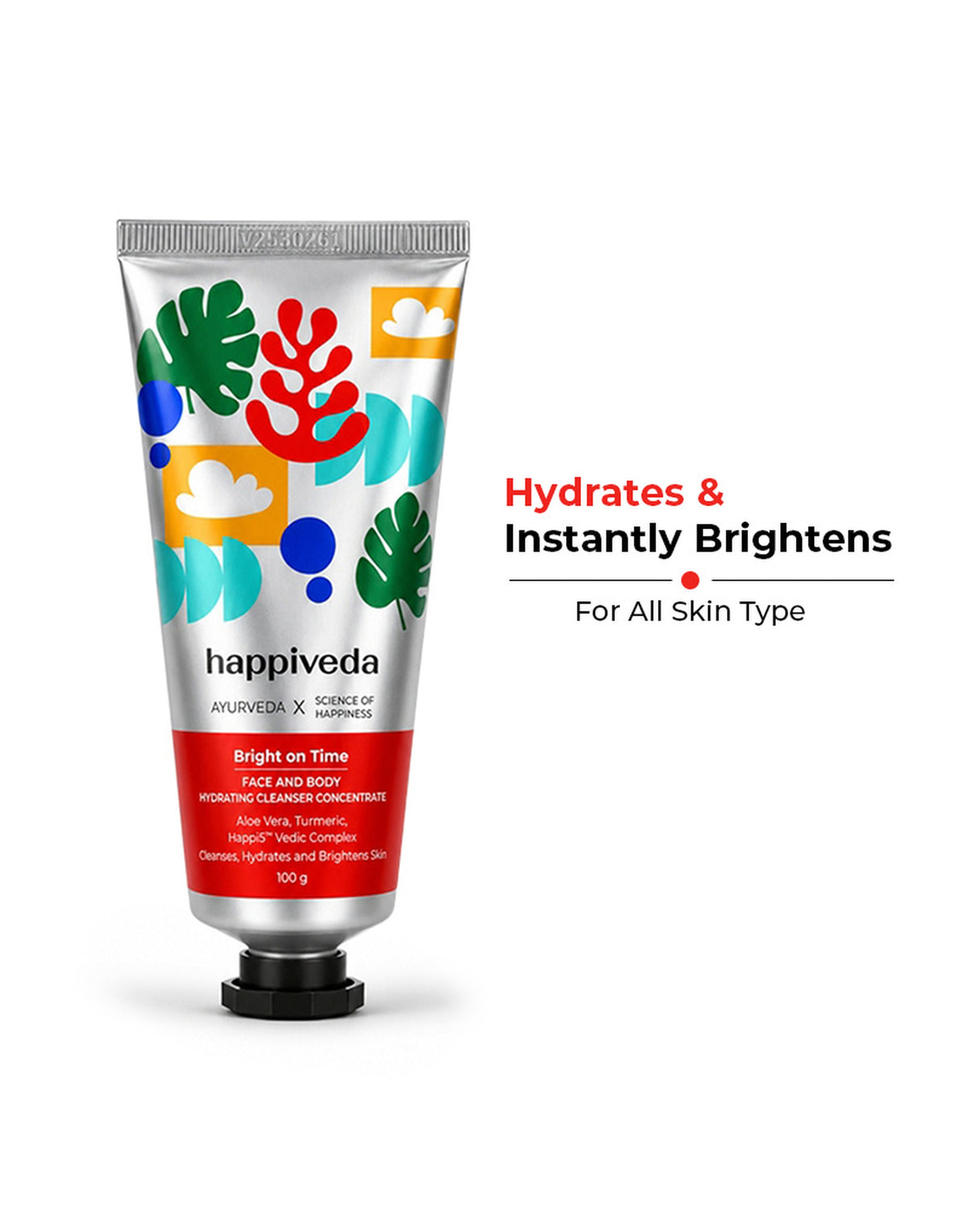
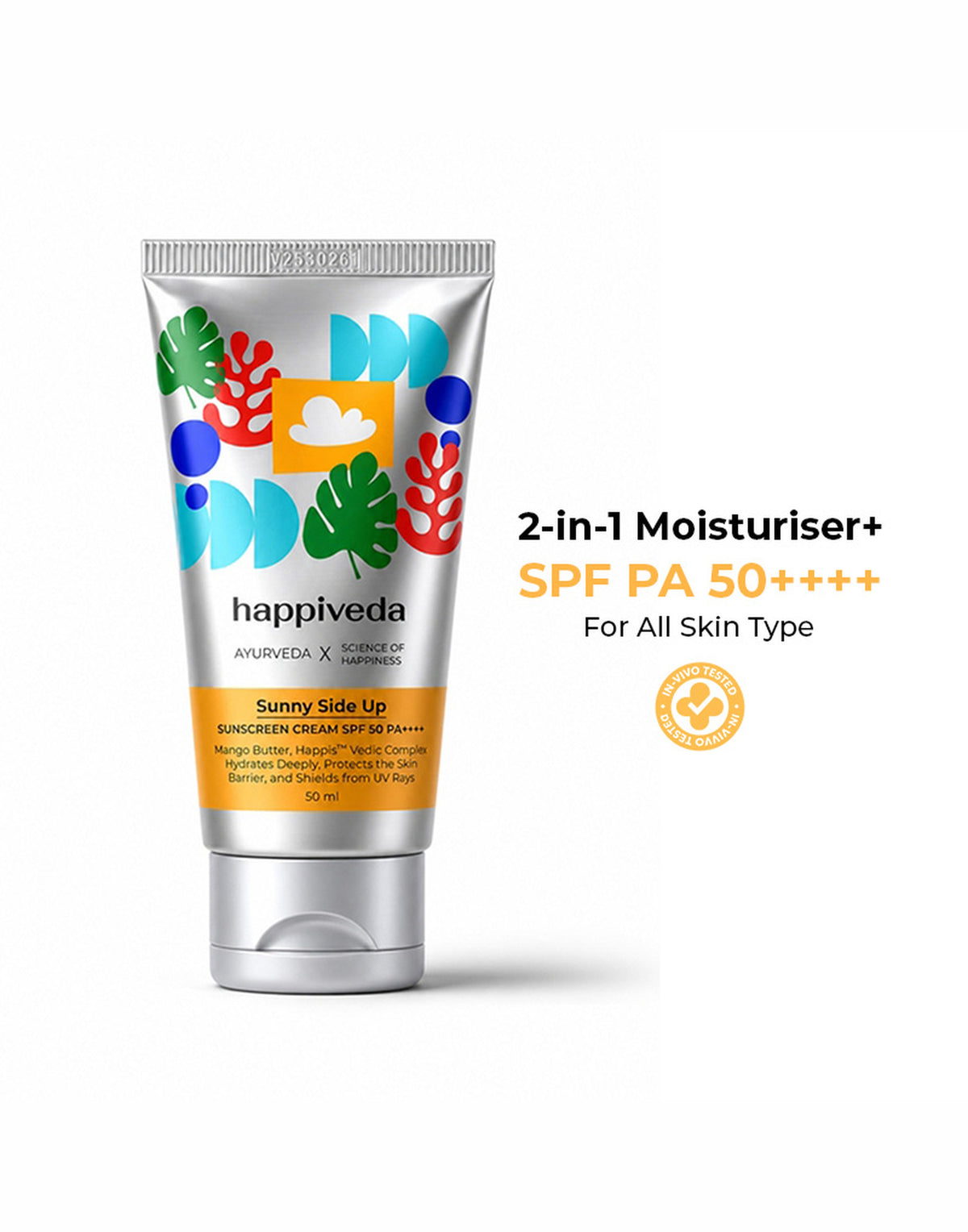
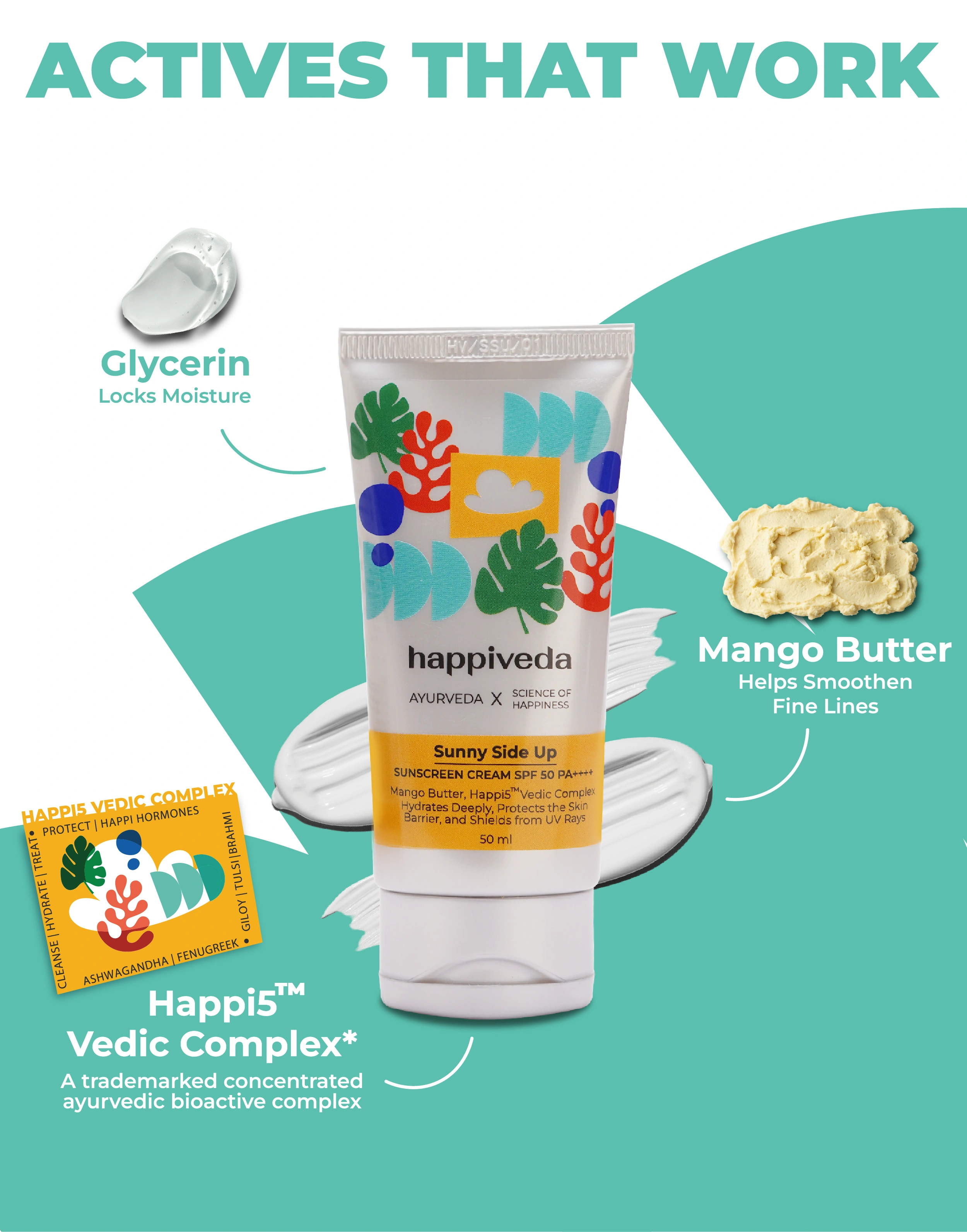
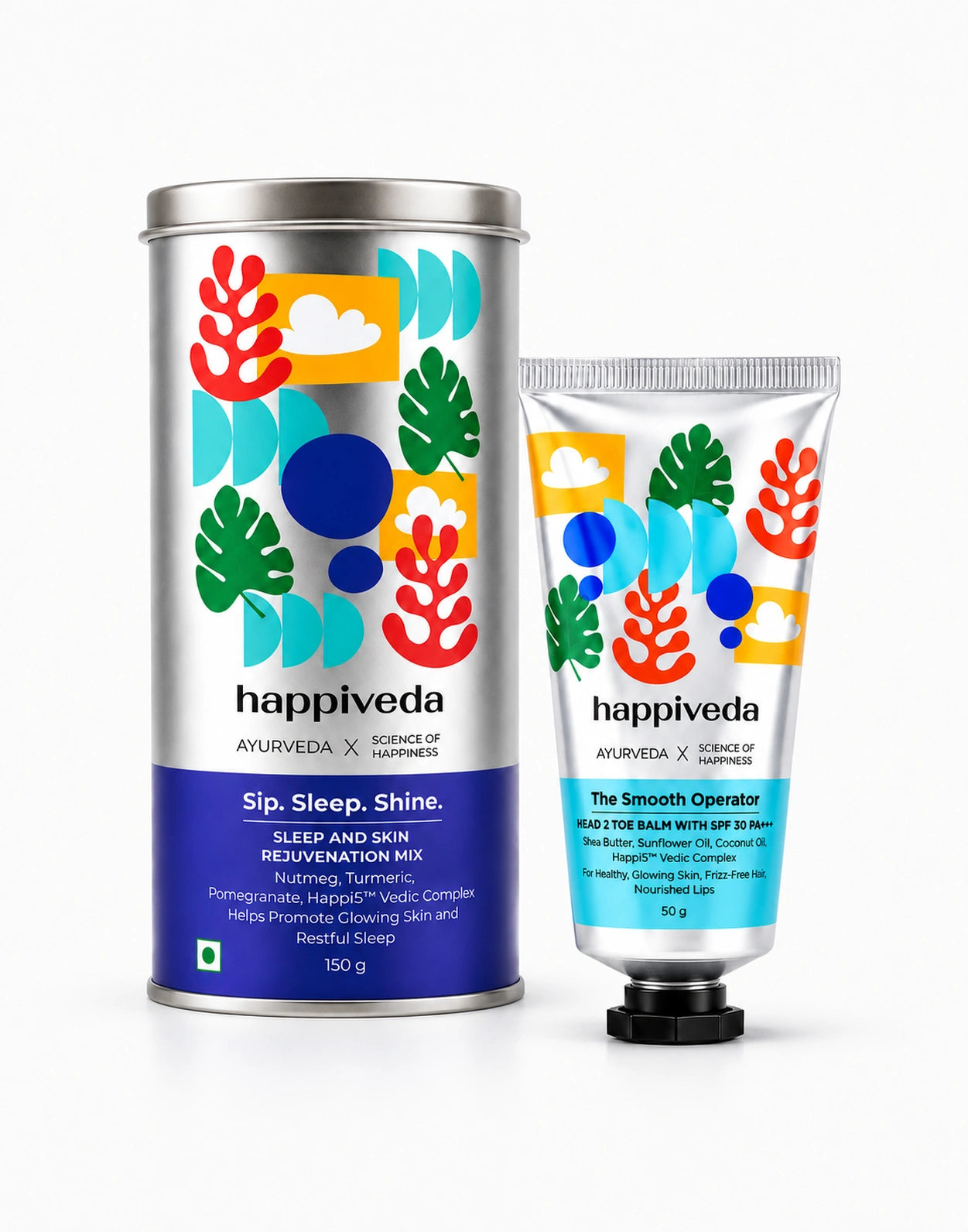
• Topicals: keep protecting skin from outside stressors. Cleanse- Hydrates & Daily Protection with SPF- all of this matters.
The Glow Gap
There’s a gap that good skincare alone can’t close. Not because skincare doesn’t work
—it does. But some of what makes skin genuinely luminous comes from cellular energy, metabolic rhythm, and tissue quality. Those are inside jobs.
Ayurveda has never called this a trend. It’s basic body maintenance — the kind your great-grandmother’s great-grandmother understood intuitively: eat with rhythm, tend your digestion, treat the body as one connected system.
The 2026 vocabulary — mitochondrial health, insulin sensitivity, metabolic biomarkers
— Is science catching up to what tradition has always known: your skin is the visible output of invisible systems. Support those systems, and your skin reflects it.
Support the inside. Take care of the outside. Let both do what they’re best at. And it’s been the Ayurvedic approach long before anyone gave it a name.